
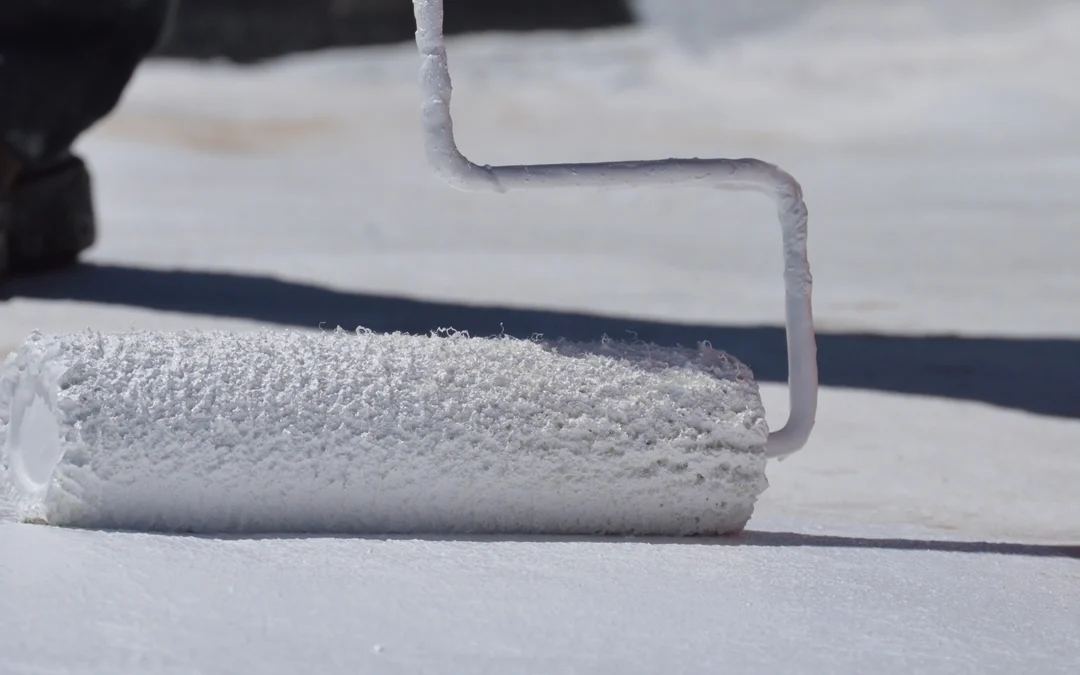
Elastomeric roof coating can add years to a commercial roof’s lifespan, reduces energy costs, and provide strong protection against the elements. It can also help prevent leaks and save money on costly repairs.
However, there are several factors to consider before deciding if elastomeric roof coating is the right solution for your building. We’ll walk you through the benefits, potential drawbacks, and other potential considerations to help you make an informed decision.
What is an Elastomeric Roof Coating?
An elastomeric roof coating is a liquid applied over an existing roof to create a protective, flexible membrane. The coating contains polymers that allow it to stretch and bond to the roof surface as it cures.
Elastomeric coatings contain two primary components:solids and a carrier. Some materials such as silicone, have a high solids content, while acrylic coatings are typically made up of roughly equal parts carrier and solids. We’ll get into the differences between these materials later.
As the elastomeric coating cures, it forms a solid, seamless and flexible membrane over the roof. . This can help seal small leaks, protect against moisture and UV exposure, and extend the useful life of an aging roof when the existing roof is a good candidate for coating.
Elastomeric roof coatings are commonly available in white, which helps reflect UV rays and solar heat, or gray, which can absorb more heat during cold months. There are four types to consider: silicone, acrylic, polyurethane, and butyl.
Types of Elastomeric Roof Coating Material
There are several types of roofing materials to choose from when considering an elastomeric coating. Each elastomeric roof coating material is formulated for different roof types, environments, and weather conditions. Here’s what to know about the main options:
Silicone
Silicone is one of the most popular elastomeric roof coating materials. It’s 96% solids and 4% carrier, so very little of the material is lost as it cures. This helps create a durable, water-resistant coating.
If you have a flat roof where ponding water is a concern, silicone can be a strong option because it holds up well against prolonged water exposure. . The main downside is cost, which is why many owners choose acrylic instead.
Acrylic
Acrylic coatings are generally better suited to sloped roofs because they can’t handle prolonged pooling water as well as silicone. Acrylic is typically around 52% solid and 48% carrier by volume. The upside? It’s more affordable than silicone.
As the coating cures, the carrier evaporates and leaves the solid material behind. This means you need more of the product to achieve the desired coating thickness, but acrylic can still be cost-effective for a sloped roof.
Aside from affordability, acrylic also has good reflective and insulating properties. Property owners using an acrylic elastomeric roof coating may see lower energy bills, making it a popular choice for commercial roofing applications.
Polyurethane
If you’re looking to add durability to your roof, polyurethane can be a strong option. It’s particularly well suited for roofs that get a lot of foot traffic or have concerns with ponding water.
Polyurethane is also a good solution for roofs with single-ply TPO, PVC, or modified bitumen. It can also handle contraction and expansion that occurs with changes in temperature.
This makes polyurethane a versatile elastomeric roof coating option. . However, polyurethane is xylene-based, which requires specific equipment and careful application.
It’s not a good fit for a DIY project. If you want to properly apply polyurethane, it’s best to call a professional roofing company.
Butyl
Butyl is created from isobutylene that’s refined into butyl rubber. It’s then formulated into a liquid coating that can be applied as an elastomeric roof coating.
Property owners use this type of elastomeric roof coating on roofs made with asphalt, modified bitumen, or single-ply roofing. Unlike acrylic, butyl can handle pooling water on low-slope or flat roofs.
Butyl is highly flexible, impermeable to air, and can create a vapor barrier that helps prevent interstitial condensation within the roof system. The downside is that it has some environmental drawbacks.
How Much Does Elastomeric Roof Coating Cost?
Elastomeric coatings typically cost between $14 to $65 per gallon depending on the coating material, product and your location.
Labor costs should also be considered. Although elastomeric coatings are applied similarly to paint, they still require proper surface preparation, application and equipment. For that reason, it’s best to leave the work to experienced roofing professionals.
If your roof is older but still in decent condition, applying elastomeric roof coating can be a more cost-effective option than getting a new roof installed. A professional can help determine whether your existing roof is a good candidate for coating before you invest in the project.
Elastomeric Roof Maintenance
Maintaining your roof after applying elastomeric coating can help extend its service life and keep the coating performing as intended. During the first one to two years after application, your roof may begin to accumulate dirt and debris.
“Chalking”, a powdery residue that can develop as elastomeric roof coatings are exposed to UV rays, can also build up over time. Some chalking is normal, but excessive chalking can be a sign that the coating is beginning to deteriorate and may need attention.
Debris and weather exposure can contribute to small splits, cracks, and tears in the coating. Minor damage may be relatively simple to repair, but the area should be cleaned and completely dry before additional coating is applied. For commercial roofs, it’s best to have a roofing professional evaluate the damage before making repairs.
As you approach the 10-year mark, inspect the coating for signs of wear, including areas where the underlying substrate is becoming visible. A dark or black appearance showing through the coating can be a sign that the coating has worn thin and may need to be recoated or repaired.
Types of Elastomeric Roof Coatings
Elastomeric roof coating can help protect your commercial roof, seal minor leaks, and extend its service life when the existing roof is a good candidate for coating . To help you make an informed decision, here’s a quick rundown of the most popular elastomeric roof coating materials:
- Silicone: A strong option for flat roofs since it’s durable against pooling water. It can be more expensive than the other coatings but provides strong protection against water and UV exposure..
- Acrylic: A popular choice because of its affordability and reflective properties. It’s best suited for sloped roofs when pooling water is less of a concern.
- Polyurethane: Often used on roofs that receive a lot of foot traffic. It commonly uses xylene-based materials and requires specific equipment and careful application.
- Butyl: A flexible and durable coating that can help prevent interstitial condensation. Its primary drawback is its environmental impact. .
No matter what type of elastomeric roof coating you choose, it’s best to leave the application, maintenance, and repairs to experienced professionals. Thinking of applying elastomeric roof coating to your property? Request a free estimate with Trenton Roofing and Siding today.

Alex Valentino – Vice President
Leading the way for the company’s second generation of family and employee ownership, Alex’s mission is to create lasting relationships built on trust and respect by providing uncompromising workmanship and unparalleled customer service. With a focus on safety and consumer education, Trenton Roofing strives to set the bar for the advancement of the roofing industry and the betterment of our local communities. When he is not working, Alex can be found traveling with his fiancée, watching football or playing a relaxing round of golf with his friends.
Recent Comments