
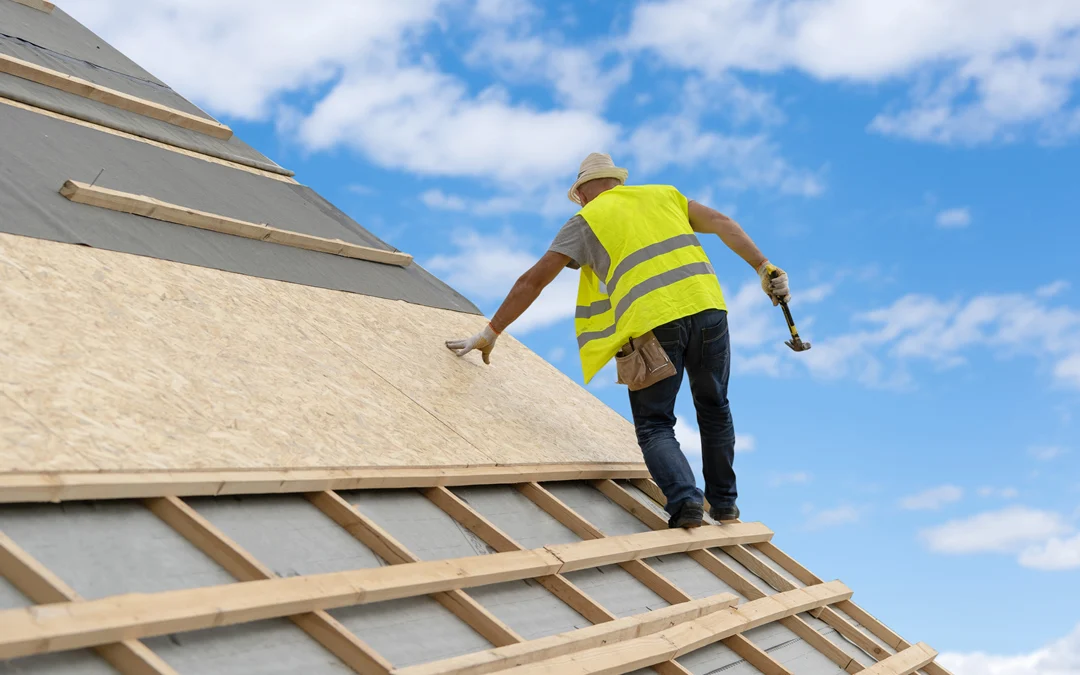
OSB (Oriented Strand Board) has been a popular alternative to plywood for decades. It typically costs less,offers comparable shear strength, and comes in multiple grades for different applications.
There’s been a long debate over which material is the better choice. OSB is often preferred when cost is a major factor, while others argue that plywood offers advantages that make it worth the additional expense.
So, which one should you choose for your roofing project? The answer depends on more than just the upfront cost. Let’s start with the basics.
How is Plywood Made?
Plywood is made by layering sheets of wood, called veneers, on top of one another. The wood grain of each layer runs in a different direction, giving plywood its strength and helping resist warping. These layers are bonded together with a strong, waterproof adhesive and then pressed under heat to create a solid, durable panel.
What Is OSB and How Is It Made?
OSB (Oriented Strand Board) is made from wood strands typically about 3 to 6 inches long. Because OSB can be manufactured from smaller or less uniform trees, it makes efficient use of wood that might otherwise go to waste.
The wood is cut into strands, dried, and treated with wax, resin, and waterproof, heat-cured adhesives. The strands are then arranged in layers and pressed under heat to create a strong, durable panel.
What are the Differences Between Plywood and OSB?
Plywood and OSB are both commonly used for roofing, roof decking, siding, and subfloors. While they serve similar purposes, their differences in cost, strength, moisture resistance, and performance can make one a better fit than the other. Here’s a look at the key differences between plywood and OSB.
How Plywood and OSB Compare
When it comes to appearance, plywood and OSB have noticeably different looks. Plywood has a smoother, more uniform surface, while OSB has a distinct pattern created by its compressed wood strands. Since roof decking is typically covered by roofing materials, however, appearance usually isn’t a major factor in choosing between the two.
Strength and Moisture Resistance
Plywood and OSB offer similar shear strength, making both suitable choices for roof decking. However, their performance can differ when moisture is involved.
Plywood generally has an advantage when exposed to moisture, but neither material is designed to withstand prolonged water exposure. Proper installation, sealing, and protection from moisture are important regardless of which material you choose.
How Do Plywood and OSB Handle Moisture?
OSB is generally heavier than plywood because its manufacturing process produces a denser panel. The difference can be noticeable when working with full sheets of roof decking.
Weight is an important consideration for roofing projects because additional decking weight adds to the load on the roof structure. It’s something to keep in mind when considering roof decking and planning your project.
Where Are Plywood and OSB Used?
Plywood and OSB are both commonly used for roof sheathing, wall sheathing, and subfloors. Both materials are easy to cut and fasten, making them practical choices for a range of construction projects.
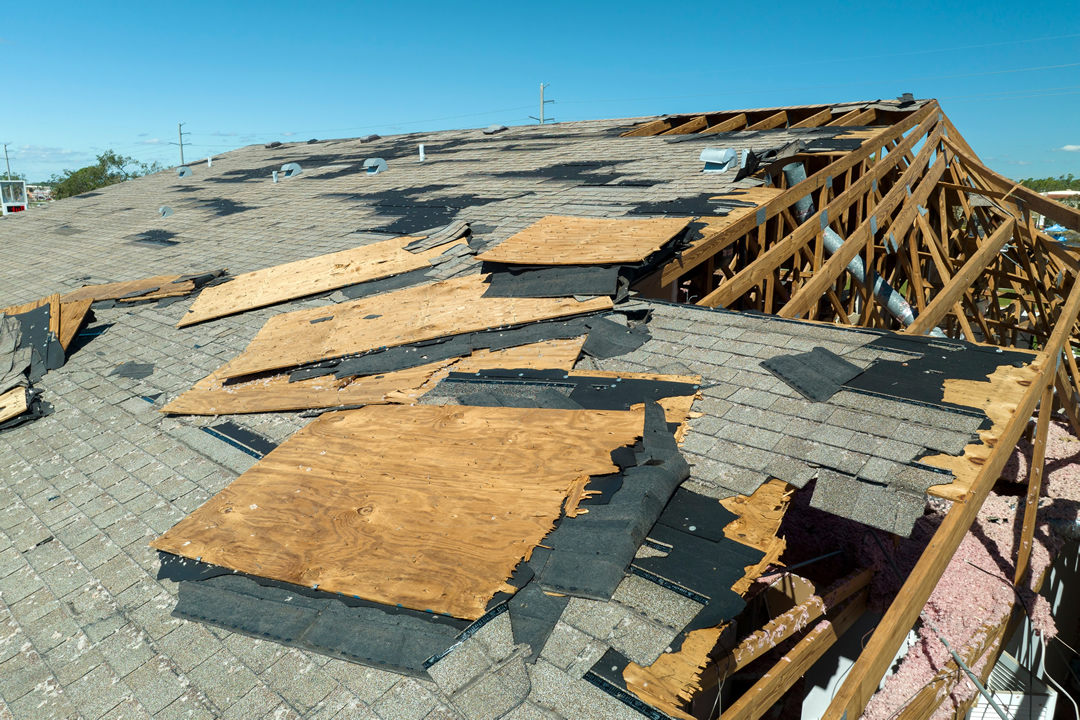
However, moisture performance can influence which material is preferred for certain applications. Plywood is sometimes favored for roofs and subfloors because it tends to handle moisture better than OSB, particularly in areas where exposure to water is a greater concern.
OSB does offer some practical advantages during installation. Some manufacturers print gridlines directly on their panels, making it easier to measure, mark, cut, and position fasteners. Some plywood manufacturers offer grid-marked panels as well, so this is not necessarily a deciding factor between the two materials.
How Do You Choose Between Plywood and OSB?
Plywood and OSB can both provide the strength and versatility needed for roof sheathing, subfloors, and other construction applications. The better choice depends on the specific project and the factors that matter most, including cost, moisture exposure, weight, and installation.
Plywood can also have an advantage when appearance matters, thanks to its more uniform wood-grain surface. For most roof decking applications, however, appearance is less important because the decking is covered by the roofing system.
So, which material makes the most sense for your project? Here’s a closer look at the advantages and drawbacks of each.
Why Choose Plywood for Roof Decking?
Plywood’s cross-laminated structure gives it a strong, stable panel that can handle substantial loads while resisting warping and cracking. Its strength and dimensional stability make it a popular choice for roof decking and other structural applications.
Plywood also generally handles moisture better than OSB. It can dry more quickly after getting wet and is less prone to the swelling that can occur with OSB. While neither material is designed for prolonged water exposure, plywood can be a practical choice for roofs and subfloors where moisture performance is an important consideration.
Plywood is also lighter than OSB, which can reduce the overall load placed on the roof structure.
Why Choose OSB for Roof Decking?
If keeping material costs down is a priority, OSB is often the more budget-friendly option. Its manufacturing process creates a dense, consistent panel, giving it reliable strength throughout the sheet.
OSB is also available in larger panel sizes for some applications, which can mean fewer seams and faster installation. Its consistent construction can make it a practical choice for large roofing projects where cost and installation efficiency are important.
Like plywood, however, OSB still needs to be properly protected from moisture. It can swell when exposed to water, so installation and moisture management are important for long-term performance.
The Plywood vs OSB: Which Should You Choose
Choosing between plywood and OSB comes down to more than just cost. Both materials can be effective for roof decking, but factors such as moisture exposure, weight, strength, panel size, and your specific project can influence which option makes the most sense.
As a quick recap:
- Prioritizing moisture resistance and lighter weight? Plywood may be the better choice.
- Looking for a more budget-friendly option? OSB is often the better fit.
- Working in an area with greater moisture exposure? Plywood may offer an advantage.
- Prioritizing consistent panel construction and larger panel options? OSB may be worth considering.
The right choice ultimately depends on the condition and requirements of your roof. If you need roof, siding, or roof decking installation or repairs, Trenton Roofing can help you determine the right approach for your project. Contact us today for a free estimate.

Alex Valentino – Vice President
Leading the way for the company’s second generation of family and employee ownership, Alex’s mission is to create lasting relationships built on trust and respect by providing uncompromising workmanship and unparalleled customer service. With a focus on safety and consumer education, Trenton Roofing strives to set the bar for the advancement of the roofing industry and the betterment of our local communities. When he is not working, Alex can be found traveling with his fiancée, watching football or playing a relaxing round of golf with his friends.
Recent Comments